
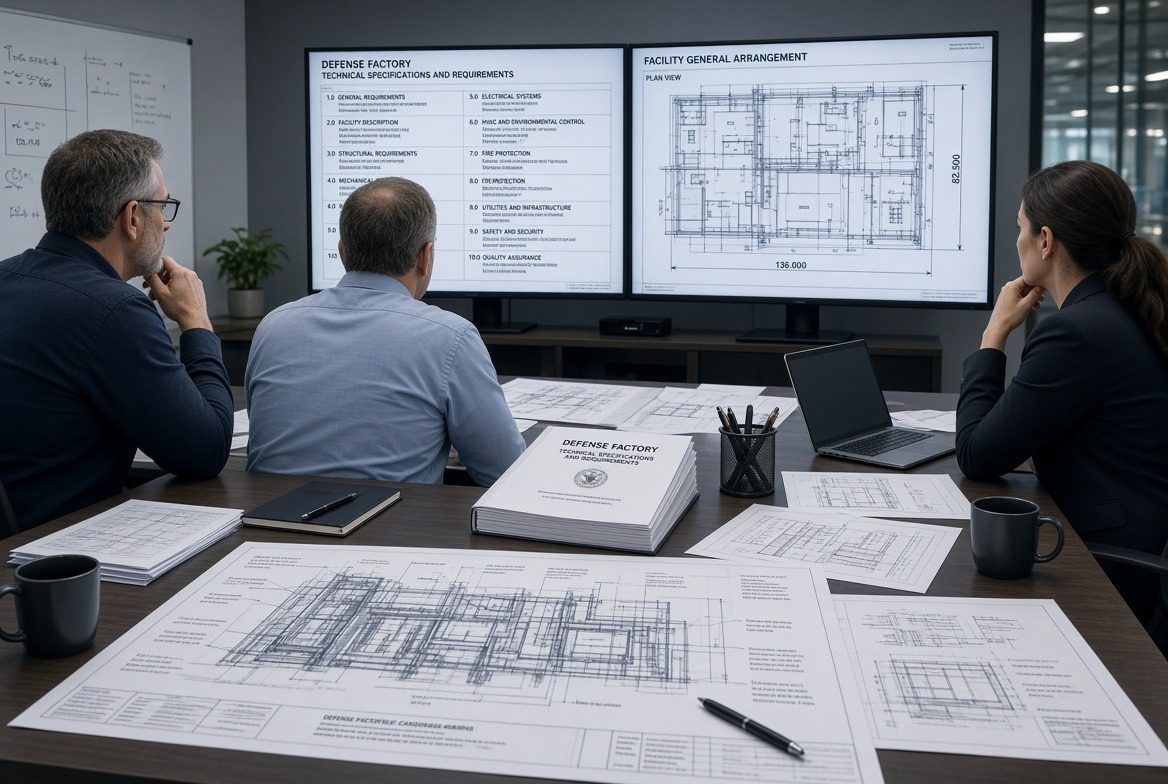
The wrong machine, a missing compressor, a narrow corridor, and an unmeasured power line all come from a specification gap. This service produces the binding technical constitution for procurement and construction.
The specification is the constitution of money and time.
Output package
- Production layout plan and material-flow diagram
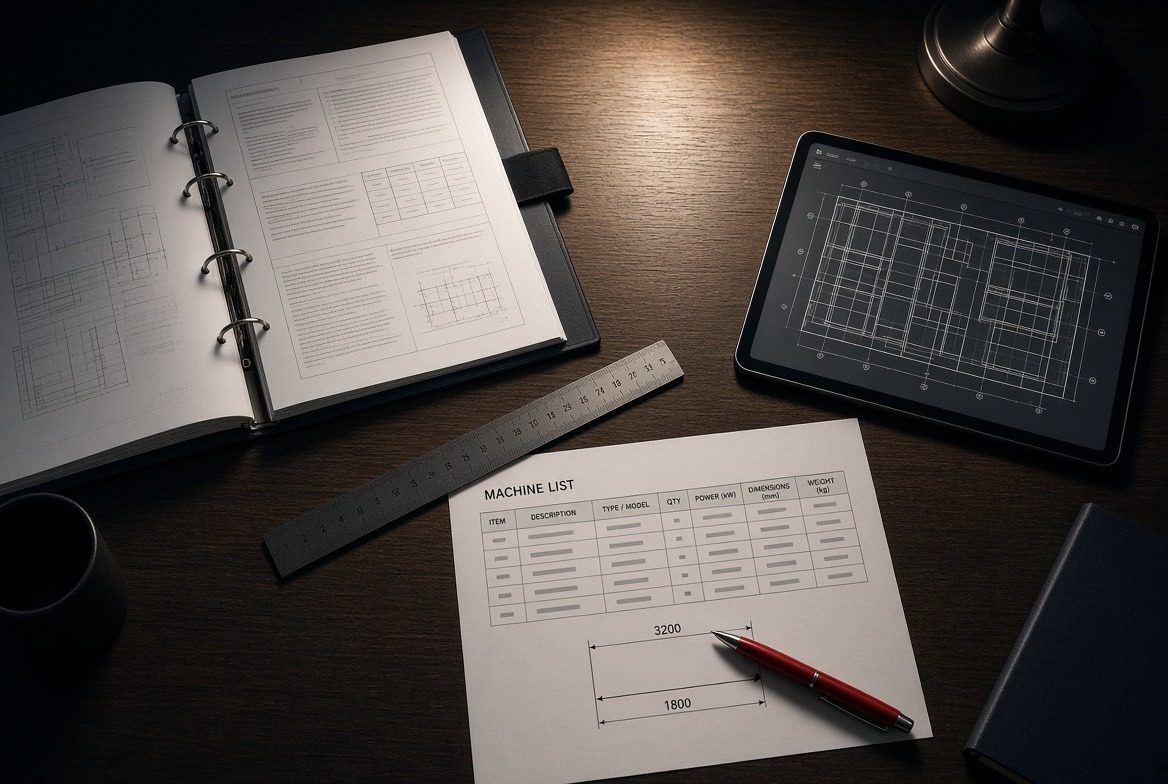
- Machine and equipment requirements list (capacity, tolerance class, cycle time)
- Energy, compressed air, HVAC, dust, and waste infrastructure
- Quality laboratory and measurement setup
- Occupational safety, fire, and site-discipline clauses
- RFQ language to be issued to suppliers
Before and after the purchase
Without a specification
- Machine chosen from a brochure, not from the part
- Compressed air and power sized after delivery
- Corridors too narrow for the tooling
- Quality lab added as an afterthought
- Every change order reopens the budget
With a specification
- Capacity, tolerance class, and cycle time fixed in writing
- Utilities measured and reserved before purchase
- Layout and material flow proven on paper first
- Measurement setup defined with the process
- One RFQ language for every supplier
Brand-agnostic machine selection
Machines are selected against the part, not the brand. A simplified example of the selection matrix we issue:
| Criterion | Requirement | Weight |
|---|---|---|
| Capacity | Parts / shift at defined cycle time | 25% |
| Tolerance class | Positional and dimensional class of the critical feature | 25% |
| Utilities | Power, air, coolant, footprint within the reserved envelope | 15% |
| Tooling & fixtures | Availability, changeover, standard interfaces | 15% |
| Service & spares | Local support, spare-part lead time, documentation | 20% |
A well-written specification ends the argument on site. A poorly written one reopens it on every invoice.